
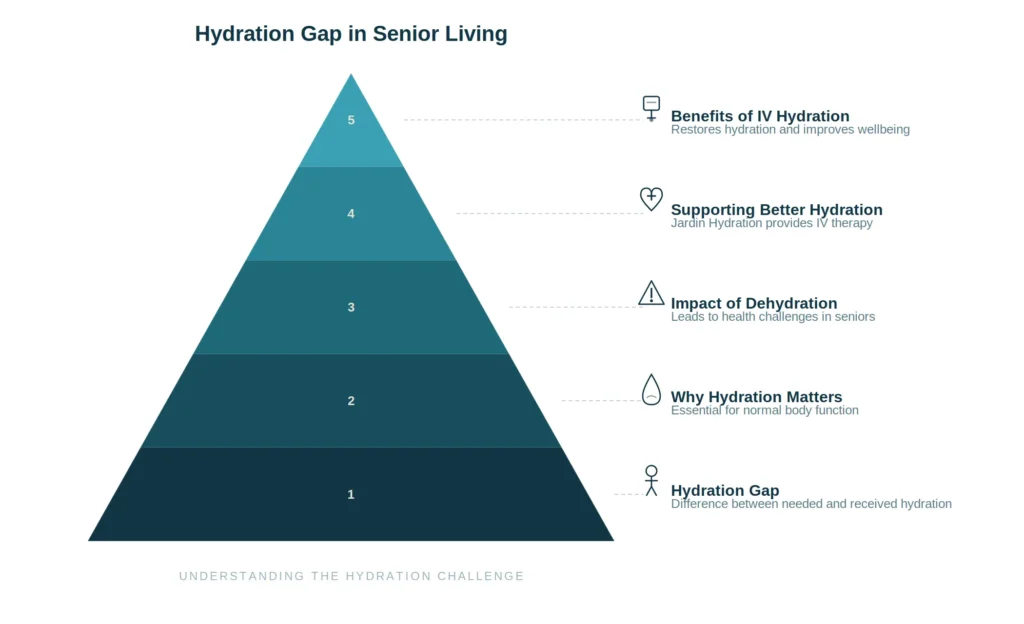
Understanding the Hydration Gap in Senior Living
Many elderly residents living in long-term care facilities experience challenges maintaining proper hydration and adequate nutrient intake.
Age-related physiological changes, illness, reduced appetite, and medication use can all contribute to chronic dehydration and nutritional deficiencies in senior populations.
Why Hydration Matters?
Proper hydration plays a critical role in maintaining normal body function, particularly for elderly residents who may already be managing complex medical conditions. Water and essential nutrients support circulation, help regulate body temperature, assist nutrient transport, and contribute to overall energy levels and recovery.
When hydration levels decrease, the body must work harder to maintain these functions. Over time, this can place additional stress on the body and increase the risk of health complications.
Why Oral Hydration Strategies Fall Short?
1
Diminished Thirst Response
Age-related decline in thirst response: residents don’t feel thirsty even when dehydrated
2
Medication-Related Fluid Loss
Fluid restriction behaviors: many residents limit intake to manage incontinence
3
Cognitive & Physical
Cognitive impairment: inability to recognize thirst or request fluids independently
4
Reduced Intake & Appetite
Polypharmacy: diuretics, antihypertensive, antidepressants, and steroids deplete fluid balance
How Common Is Hydration in Long-Term Care?
Research has shown that 50–90% of nursing home residents do not consume adequate fluids, placing them at high risk for dehydration. A 2023 meta-analysis of 61 studies, including over 22,000 participants, found that approximately 34% of long-term care residents are dehydrated, nearly double the rate seen among community-dwelling older adults. Dehydration has also been identified as a primary contributing factor in approximately 34% of hospital transfers from skilled nursing facilities.
A Proactive Approach to Resident Care
Addressing dehydration early can help support better health outcomes for elderly residents. By providing convenient, facility-based infusion therapy, Jardin Hydration helps senior living communities support resident health while maintaining safe and efficient care processes.
Supporting Better Hydration
Maintaining proper hydration can help support overall wellbeing, recovery, and daily functioning for elderly residents. However, oral hydration may not always be sufficient for individuals experiencing illness, reduced appetite, or other health challenges.
In these situations, additional hydration support may be beneficial.


Advanced IV Hydration Support
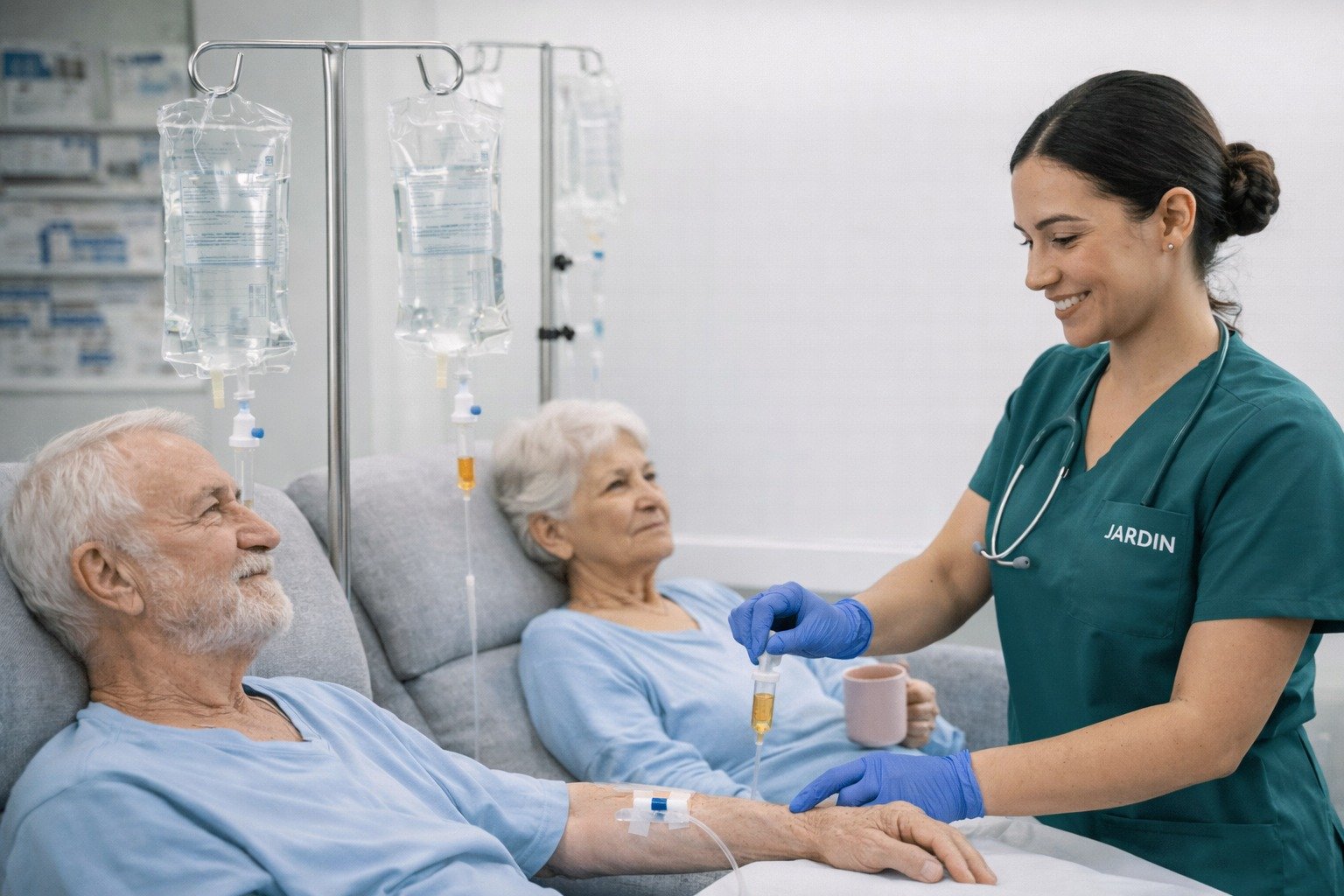
Jardin Hydration provides Advanced IV Hydration therapy designed to help support hydration and nutritional balance for residents in senior living communities.
By delivering fluids and essential nutrients directly into the bloodstream, IV therapy allows for rapid absorption and effective hydration support, particularly when oral intake may not be sufficient.
These therapies are delivered on-site by licensed nurses and coordinated with physician oversight to ensure safe and appropriate care.
Advanced IV Hydration therapy can help support:
- Hydration restoration
- Recovery during illness
- Improved energy and wellbeing
- Nutritional support when needed
FAQs
What is the hydration gap in senior living?
The hydration gap refers to the difference between the amount of fluids elderly residents need and what they actually consume, often leading to dehydration and increased health risks.
Why are elderly residents at higher risk of dehydration?
Older adults are more susceptible to dehydration due to reduced thirst sensation, chronic health conditions, medication use, and decreased appetite.
How common is dehydration in long-term care facilities?
Studies indicate that 50–90% of nursing home residents do not consume adequate fluids, with approximately 34% experiencing dehydration.
Can oral hydration always meet seniors’ needs?
Not always. Some seniors may struggle to maintain adequate fluid intake due to illness, reduced appetite, or other health challenges, making additional hydration support necessary.
When should IV hydration be considered?
IV hydration may be beneficial when a senior is unable to maintain proper hydration through oral intake due to illness, reduced appetite, or other medical conditions.
Schedule Professional IV Therapy
We provide safe and professional IV therapy services for patients at home, in nursing homes, and in assisted living facilities.